
105 AI in Marketing Statistics for 2026
Marketing teams now use AI to write copy, make images and buy ads. Here are the numbers on who uses it, what it costs and what it returns.
Top AI in Marketing Statistics
-
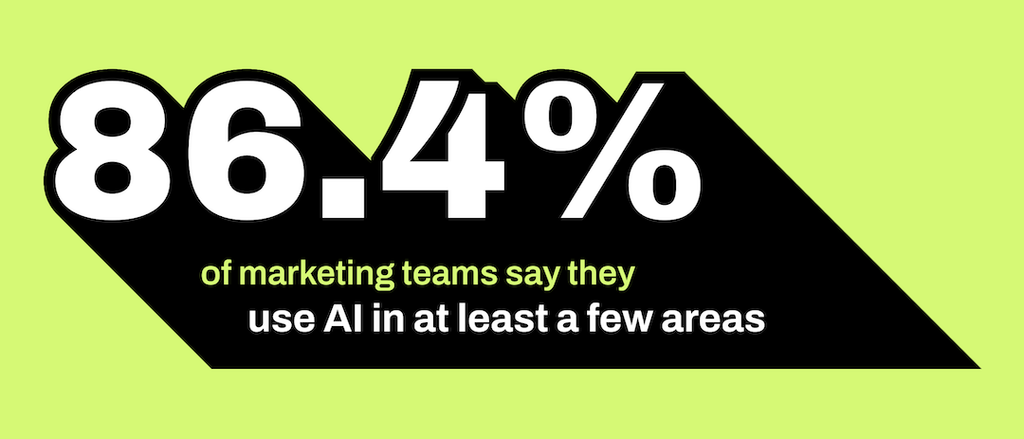
86.4% of marketing teams say they use AI in at least a few areas (2025).
-
88% of US marketers said they rely on AI in their current job (2024).
-
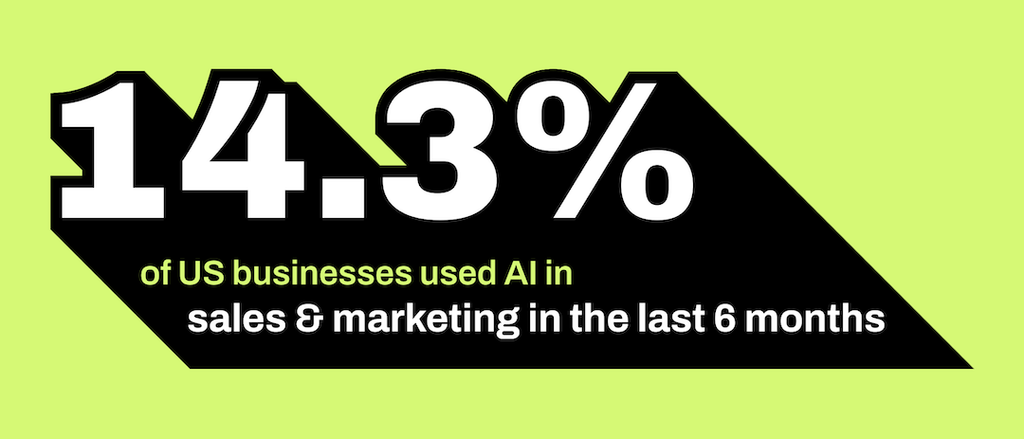
14.3% of US businesses used AI in sales and marketing in the past six months (2025–26).
-
52% of US firms using AI in business functions used it in sales and marketing (2025–26).
-
24.2% of US companies' marketing activities use AI on average (2026).
-
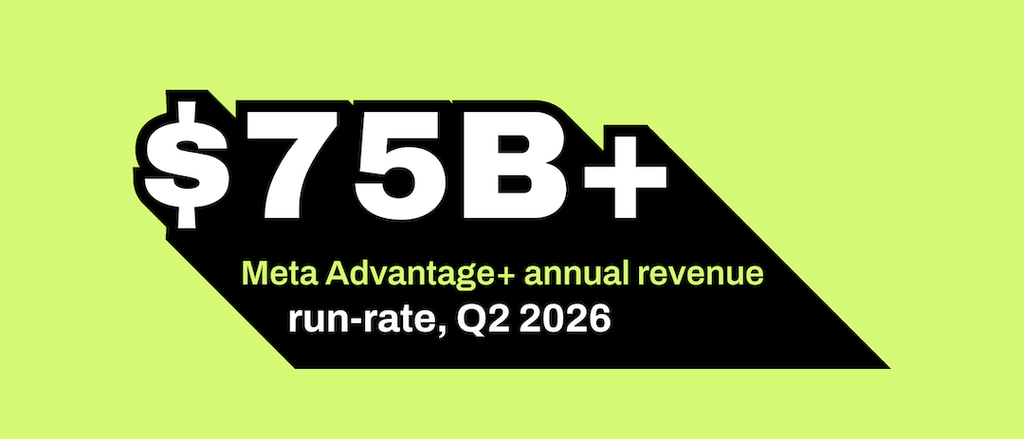
Over $75 billion is Meta's Advantage+ annual revenue run-rate (Q2 2026).
-
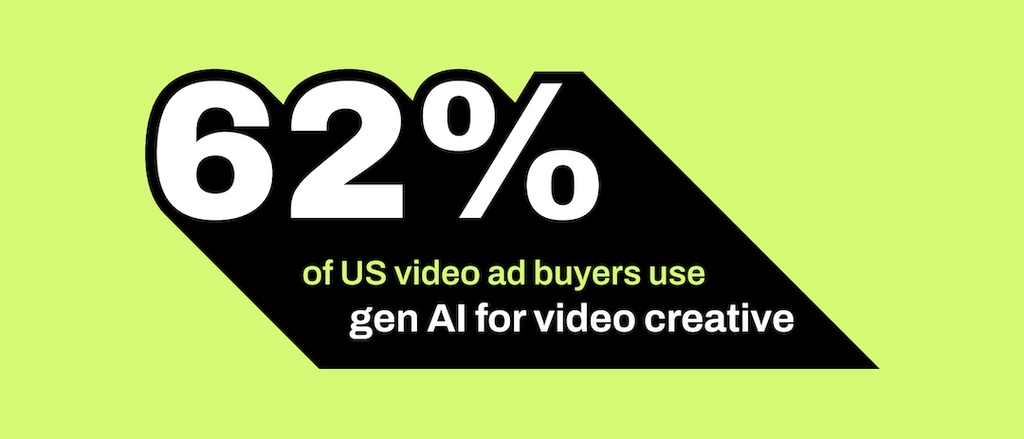
62% of US digital video ad buyers use generative AI for video ad creative (2026).
-
61% of adults (32-country average) are comfortable with AI mainly creating brand ads (2026).
How Many Marketers Use AI?
This figure comes from HubSpot’s yearly survey of marketers.
1. 86.4% of marketing teams say they use AI in at least a few marketing areas (2025) (HubSpot State of Marketing 2026). Just 1.7% of marketers neither use AI nor plan to.
Source: HubSpot State of Marketing 2026
Other Estimates of Marketers’ AI Use
Other surveys ask the question in different ways. Each one covers a different group of marketers.
2. 91% of marketers report actively using AI in their work in 2025, up from 63% a year earlier (Jasper State of AI in Marketing 2026). Jasper surveyed 1,400 marketers across industries and company sizes.
3. 75% of marketing organizations use AI in at least one form (2025) (Salesforce State of Marketing, 10th ed. (AU summary)). For 61% of marketing teams, full AI integration is still a work in progress.
4. 88% of US marketers said they rely on AI in their current job (2024) (SurveyMonkey). The survey asked 507 marketing professionals.
5. 60% of marketers say their team is piloting or scaling AI in 2025 (Marketing AI Institute 2025 State of Marketing AI). That is up 18 percentage points since 2023.
6. 97% of marketing leaders use AI in their daily creative work (2026) (Canva State of Marketing & AI 2026). The survey covered 1,415 leaders at firms with 500+ staff in seven countries.
How Many Businesses Use AI for Marketing?
These figures come from government surveys of businesses in the US, the EU and Canada. Some count all businesses, and others count only businesses that already use AI.
7. 14.3% of US businesses used AI in sales and marketing in the past six months (2025–26) (US Census Bureau BTOS AI Supplement 2026). The estimate’s standard error is 0.11 percentage points.
Source: US Census Bureau BTOS AI Supplement 2026
8. 52% of US firms with AI in at least one business function used it for sales and marketing in the past six months (2025–26) (US Census Bureau, CES-WP-26-25). Strategy and business development came next at 45%.
| Business function | 2025–26 |
|---|---|
| Production of goods | 1.7 |
| Provision of services, products, or merchandise | 6.4 |
| Strategy and business development | 12.4 |
| Finance and accounting | 6.6 |
| Sales and marketing | 14.3 |
| Customer service | 7.6 |
| Research and development | 11.2 |
| Information technology | 11.4 |
| Human resources | 4.2 |
| Public relations and communication | 9.3 |
| Management and administration | 8.1 |
| Sourcing, supply chains, and purchasing | 2.6 |
| Quality management and control | 2.8 |
| Distribution | 0.9 |
| Legal and compliance | 7.1 |
In the Census paper, “marketing specialists” are AI-using firms with a high chance of using AI in sales and marketing and lower chances elsewhere.
9. About 31% of US firms using AI in business functions are “marketing specialists” (2025–26) (US Census Bureau, CES-WP-26-25). They make up about 9% of all firms.
10. 19.0% of US businesses with 250 or more employees used AI in sales and marketing in the past six months (2025–26) (US Census Bureau BTOS AI Supplement 2026). Among businesses with 1 to 4 employees, the share was 13.1%.
11. 6.92% of EU businesses with 10+ staff used AI for marketing or sales in 2025 (Eurostat isoc_eb_ai). The base is all enterprises, not only AI users. Agriculture, forestry, fishing, mining and finance are left out.
12. 1.63% of EU businesses with 10+ staff used AI for marketing or sales in 2021 (Eurostat isoc_eb_ai). It was 4.59% in 2024.
13. 34.7% of EU enterprises using AI applied it to marketing or sales in 2025 (Eurostat isoc_eb_ai). The base is enterprises with 10 or more employees that use AI.
14. 19.8% of Canadian businesses that used AI to produce goods or deliver services used it for marketing automation (12 months to Q2 2026) (Statistics Canada Table 33-10-1167-01). Statistics Canada rates the estimate’s quality as excellent.
How Much of Marketing Work Uses AI?
The CMO Survey asks US marketing leaders, such as chief marketing officers (CMOs), how much of their marketing work uses AI. Generative AI is AI that creates text, images or video. B2B firms sell to other businesses, and B2C firms sell to consumers.
In The CMO Survey, companies estimate what share of their marketing work uses AI or machine learning.
15. On average, 24.2% of US companies’ marketing activities used AI in 2026, up from 13.1% in 2024 (The CMO Survey 2026 Highlights). Use has nearly doubled in two years.
16. On average, 22.4% of US companies’ marketing activities used generative AI in 2026, up from 7.0% in 2024 (The CMO Survey 2026 Highlights). The survey reports this as 220% growth.
17. 11.8% of US companies surveyed do not use generative AI in marketing at all (2026) (The CMO Survey 2026 Topline). Respondents said their company uses generative AI in marketing activities 0% of the time.
18. On average, 27.44% of marketing activities at US B2B services firms use generative AI (2026) (The CMO Survey 2026 Firm and Industry Breakout). B2C product firms averaged 18.95%, B2B product firms 21.52% and B2C services firms 20.71%.
What Do Marketers Use AI For?
These figures show which marketing tasks teams hand to AI. ROI means return on investment.
19. 73.9% of US companies use AI for marketing content creation in 2026 (The CMO Survey 2026 Highlights). That is up from 49.2% in fall 2023.
| AI application | 2026 |
|---|---|
| Content creation | 73.9 |
| Content personalization | 65.4 |
| Improving marketing ROI by optimizing marketing content and timing | 49.5 |
| Marketing automation | 48.9 |
| Data analysis and reporting | 46.3 |
| Targeting decisions | 45.2 |
| Predictive analytics for customer insights | 41.5 |
| GEO (Generative Engine Optimization) | 41.5 |
| Conversational AI for customer service | 39.9 |
| Customer segmentation | 35.6 |
| Programmatic advertising and media buying | 32.4 |
| Listening and sentiment analysis | 28.2 |
| Next best offer | 12.8 |
| Autonomous objects/systems | 9.6 |
| Augmented and virtual reality | 6.4 |
| Voice search optimization | 4.3 |
| Facial recognition and visual search | 3.7 |
| Biometrics also known as chipping | 1.1 |
20. 65.4% of US companies use AI to personalize marketing content in 2026 (The CMO Survey 2026 Highlights). That is up from 52.8% in fall 2023.
21. 48.9% of US companies surveyed use AI-powered marketing automation in 2026, up from 28.0% in fall 2023 (The CMO Survey 2026 Highlights).
22. 49.5% of US companies use AI to improve marketing ROI by optimizing content and timing in 2026 (The CMO Survey 2026 Highlights). That is up from 36.6% in fall 2023.
In The CMO Survey, “GEO” means working to get content to appear in AI-generated search results.
23. 41.5% of US companies use AI in marketing for generative engine optimization (2026) (The CMO Survey 2026 Firm and Industry Breakout). Among firms with $100–499 million in revenue, 52.5% do so.
24. 35.6% of US companies use AI for customer segmentation in 2026 (The CMO Survey 2026 Highlights). That is up from 21.5% in fall 2023.
25. 32.4% of US companies use AI for programmatic ad buying in 2026 (The CMO Survey 2026 Highlights). That is down from 35.0% in fall 2023.
26. 56% of marketers cite idea generation as an AI use case (2025) (Jasper State of AI in Marketing 2026 report). Among enterprise marketers, the share is 68%.
27. 67% of marketers use AI to create images in 2026, up from 39% in 2024 (Social Media Examiner 2026 AI Marketing Industry Report). Video use rose to 37%, from 25%.
28. 60% of AI-using marketers use AI for data analysis (2026), up from 28% in 2025 (Ahrefs). Keyword clustering use rose to 45%, from 23%.
Which AI Tools Do Marketers Use?
These surveys asked marketers which AI tools they use for work.
29. 81% of marketers use ChatGPT for work in 2026 (Social Media Examiner 2026 AI Marketing Industry Report). Claude follows at 65% and Gemini at 60%.
30. 42% of marketers name Claude their most important AI platform in 2026 (Social Media Examiner 2026 AI Marketing Industry Report). Another 39% name ChatGPT.
31. 83% of AI-using marketers in Ahrefs’ survey use Claude for content (2026) (Ahrefs). In the same group, 76% use ChatGPT and 58% use Gemini.
How Many Marketers Use AI Agents?
These figures track how many marketing teams use AI agents.
32. 81% of martech leaders were piloting or fully implementing AI agents in 2025 (Gartner). Gartner surveyed 413 marketing technology leaders.
33. 52% of martech leaders piloting AI agents use them for content or marketing asset production (2025) (Gartner). Campaign management or optimization came in at 43%.
Salesforce describes “agentic AI” as technology that not only generates outputs but can also act independently and learn over time.
34. Only 13% of marketers say they currently use agentic AI (2025) (Salesforce State of Marketing, 10th ed.). High-performing marketers are nearly twice as likely as underperformers to use AI agents.
35. 11% of marketers have autonomous AI agents in their regular workflow in 2026 (Social Media Examiner 2026 AI Marketing Industry Report). Another 24% are experimenting with agents.
How Much Are Marketers Spending on AI?
These figures show how much marketers spend on AI.
36. CMOs put an average 15.3% of marketing budgets toward AI initiatives in 2026 (Gartner CMO Spend Survey 2026). Gartner surveyed 401 marketing leaders in North America, the UK and Europe.
37. 21.3% of marketing budgets go to AI initiatives at organizations with mature or fully developed AI readiness (2026) (Gartner CMO Spend Survey 2026). The survey average was 15.3%.
38. 43% of CMOs say their AI investment in marketing topped $15 million in 2026 (BCG, June 2026). That was up from 28% a year earlier.
39. 71% of CMOs planned to invest over $10 million a year in gen AI for the next three years (2025) (BCG, June 2025). That was up from 57% the year before.
How Big Is the AI Marketing Market?
These figures estimate the size of the AI marketing market and the money invested in it.
40. An estimated $27.0 billion was the size of the global AI in marketing market in 2025 (Grand View Research). The market is projected to reach $194.8 billion by 2033.
41. $2.51 billion in private AI investment went to marketing and digital-ads startups globally in 2025 (Stanford AI Index 2026). That compares with $1.60 billion in 2024.
| Year | Marketing, digital ads |
|---|---|
| 2018 | 0.177443068 |
| 2019 | 0.264057234 |
| 2020 | 0.523529781 |
| 2021 | 0.773365881 |
| 2022 | 1.109443433 |
| 2023 | 1.198622814 |
| 2024 | 1.596854185 |
| 2025 | 2.50882042 |
How Much Ad Spend Goes to AI Search and Chat?
These forecasts cover ads shown in AI search and chat.
42. $2.08 billion in US AI search ad spending is forecast for 2026 (eMarketer, Jan 2026). That is 1.3% of total US search ad spending.
43. $68.25 billion in US AI ad spending is forecast for 2030 (eMarketer US AI Advertising Forecast 2026). Spending is forecast to more than double over the next five years.
44. More than 80% of US AI advertising in 2026 is forecast to run next to AI content (eMarketer US AI Advertising Forecast 2026). One example is search ads shown beside Google AI Overviews.
What Results Do Marketers Report From AI?
These figures come from companies and marketing leaders who report their own results.
45. 14.06% is the average sales productivity gain US marketing leaders report from using AI in marketing in 2026 (The CMO Survey 2026). The median answer was 10%.
46. 14.64% is the average cut in marketing overhead costs US marketing leaders report from AI in marketing (2026) (The CMO Survey 2026). The median answer was 10%.
47. 10.75% is the average rise in customer satisfaction US marketing leaders report from AI in marketing (2026) (The CMO Survey 2026). The median answer was 5%.
48. 21% of respondents whose companies use AI in marketing and sales report AI lifted revenue there by up to 5% in the past year (McKinsey, The State of AI in 2026). Another 9% saw a 6–10% rise, and 7% saw more than 10%.
49. 67% of marketing teams say AI saves them 10 or more hours a week (2025) (HubSpot State of Marketing 2026 report). HubSpot surveyed 1,505 marketers in North America, Europe, Asia and Australia.
50. 93% of CMOs using gen AI report a return on it, as of 2025 (SAS and Coleman Parkes, 2025). Among marketing teams using gen AI, 83% report a return.
51. 31% of B2C CMOs say their agentic marketing transformation is already having significant, measurable revenue impact (2026) (BCG, June 2026). Among B2B CMOs the share is 20%.
What Do Controlled Experiments Show?
These studies compared groups that got AI, or were told about it, with groups that did not. Click-through rate is the share of people who click an ad, and conversion rate is the share who buy.
52. Up to 16.3% higher sales came from gen AI tools in randomized trials at a large online retail platform (2023–24) (Fang et al., arXiv 2026). Some workflows showed no detectable effect.
53. 21.7% higher conversion rates came from a gen AI pre-sale chatbot versus no live support (2023) (Fang et al., arXiv 2026). The control group received a message that real-time support was unavailable.
54. 2.1% more sales came from AI-written product descriptions in a 2023 randomized trial on a retail platform (Fang et al., arXiv 2026). In a separate 2024 trial, AI search query refinement raised sales by 2.9%.
55. −4.5% was the estimated change in sales from GenAI-optimized Google Shopping ad titles in a 2024 field experiment (Fang et al., arXiv 2026). The change was not statistically significant.
56. 6 to 9 percentage points more engagement came from gen AI personalized video ads in a WhatsApp field experiment published in 2025 (Kapoor & Kumar, Marketing Science 2025). The comparisons were with personalized image ads and generic video ads.
57. Up to 31.5% lower click-through rates followed when people in experiments were told an ad used generative AI (published 2025) (NYU Stern, Nov 2025).
AI in Ad Platforms: Meta, Google, Amazon and Pinterest
Meta, Google, Amazon and Pinterest share these figures in their quarterly results. Advantage+, AI Max, Performance Max and Performance+ are their AI-powered or automated tools for running ad campaigns.
58. Over $75 billion is the annual revenue run-rate of Meta’s Advantage+ in Q2 2026 (Meta Q2 2026 earnings call). Meta calls Advantage+ its AI-powered end-to-end ad solutions.
Source: Meta Q2 2026 earnings call
59. Over 9 million small businesses use at least one Meta AI ad creative tool, as of Q2 2026 (Meta Q2 2026 earnings call).
60. $10 billion was the combined revenue run-rate of Meta’s video generation ad tools in Q4 2025 (Meta Q4 2025 earnings call). Meta said their quarter-over-quarter growth outpaced overall ads revenue growth by nearly 3x.
61. 8.3% more ad clicks and 15.7% more conversions on Facebook came from Meta’s Q2 2026 AI model upgrades (Meta Q2 2026 earnings call).
62. Half a million advertisers had adopted Google’s AI Max for Search by July 2026 (Alphabet Q2 2026 earnings call).
63. More than 30% of Google customers’ Search ad spend uses AI Max or Performance Max (April 2026) (Alphabet Q1 2026 earnings call).
64. 15% more conversions or value on Search, on average, is what adopters of Google’s AI-powered campaigns see (Q2 2026) (Alphabet Q2 2026 earnings call). Google names AI Max and Performance Max as examples. Return on ad spend stays similar.
65. Nearly 70 million ad creative assets were made with Gemini in AI Max and Performance Max in Q4 2025 (Alphabet Q4 2025 earnings call). They came from the text customization feature.
66. 8% lower cost per impression is what advertisers using Amazon’s AI-powered Ads Agent see versus non-users (Q2 2026) (Amazon Q2 2026 results). Their cost per acquisition is 6% lower.
67. About 30% of Pinterest’s lower-funnel revenue ran through its automated Performance+ campaigns as of Q1 2026 (Pinterest Q2 2026 earnings call).
AI-Generated Ads and Content
These figures show how much ad creative and web content AI now makes, and how AI-made ads perform.
68. 62% of US digital video ad buyers use generative AI for video ad creative in 2026 (IAB Digital Video Ad Spend & Strategy 2026). That is up from 51% in 2025, in a survey of 360 buyers.
69. 33% of digital video ad creative is expected to be made or adjusted with generative AI in 2026, among US buyers who use it (IAB Digital Video Ad Spend & Strategy 2026). Those buyers put the 2025 share at 24%.
70. 83% of US ad executives say their company has deployed AI in the creative process (2025–26) (IAB/Sonata The AI Ad Gap Widens). That is up from 60% in IAB’s 2024 study.
71. 78% of global brands use AI-generated or AI-enhanced content in consumer-facing marketing (2026) (WFA AI labelling research 2026). WFA asked 27 multinational brands with $71 billion in combined ad spend.
72. 18% of global brands using AI in external marketing creative use it to generate fully synthetic humans (2026) (WFA AI labelling research 2026). Another 33% use AI to replicate or enhance images of real people.
73. Over 40% of ads that used generative AI more seamlessly reached the top tier for branded cut-through in a 2025 analysis (Kantar, Rethinking AI-generated advertising). Ads with distracting or unnatural visuals, typically with more obvious AI use, performed worse.
74. 0.76% was the raw average click-through rate of display ads with AI-generated images in 2023 (Exner, Hartmann, Netzer & Zhang, “AI in disguise”). Human-made ads averaged 0.65%.
75. 49.9% of new English-language web articles were primarily AI-generated in Q1 2026 (Graphite, AI Now Writes as Many Online Articles as Humans). In Q4 2025, the share was 50.9%.
How Do Consumers Feel About AI in Ads?
These figures show how consumers respond to AI in ads and to AI disclosure.
In Ipsos’s survey, the “32-country average” is a simple average of country results, not weighted by population.
76. 61% of adults, on average across 32 countries, are comfortable with AI mainly creating brand advertising content (2026) (Ipsos AI Monitor 2026). In the US, 49% are comfortable.
77. 55% of adults, on average across 32 countries, are comfortable with AI mainly targeting advertising messages (2026) (Ipsos AI Monitor 2026). In the US, 40% are comfortable.
78. 46% of adults, on average across 32 countries, would trust a generative AI tool’s information less if they knew advertisers influenced its answers (2026) (Ipsos AI Monitor 2026). In the US, 55% would trust it less.
79. 80% of adults, on average across 32 countries, agree products and services using AI should have to disclose it (2026) (Ipsos AI Monitor 2026). In the US, 82% agree.
In the IAB/Sonata study, “Gen Z” means ages 16 to 27 and “Millennials” ages 28 to 43.
80. 45% of US Gen Z and Millennial consumers feel positive about AI-generated ads (2025–26) (IAB/Sonata Insights The AI Ad Gap Widens 2026). By contrast, 82% of ad executives believe these consumers feel positive.
81. 73% of US Gen Z and Millennial consumers say knowing an ad used AI would not lower their purchase likelihood (2025–26) (IAB/Sonata Insights The AI Ad Gap Widens 2026).
82. 67% of consumers expect brands to clearly flag AI-generated ads, per a 2025 survey (Capgemini What Matters to Today’s Consumer 2026). The figure is based on 2,003 respondents.
83. 52% of consumers do not trust synthetic or virtual influencers in advertising, per a 2025 survey (Capgemini What Matters to Today’s Consumer 2026). In the same survey, 66% were aware that ads use these influencers.
84. 78% of British adults would trust a brand less if it used AI-generated actors in ads (2026) (YouGov UK 2026). Among 18–34-year-olds, the share is 83%.
How Do Shoppers Use AI?
These figures show how shoppers use AI tools to find and buy products.
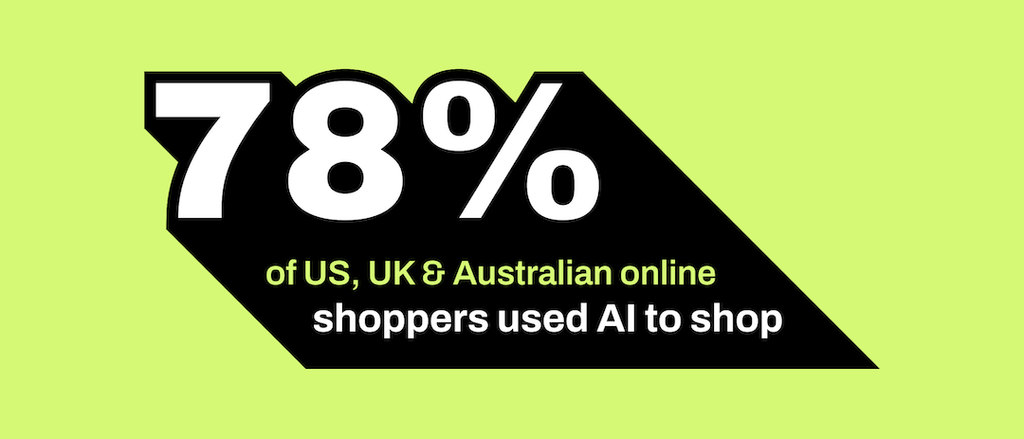
85. 78% of US, UK and Australian online shoppers used AI for shopping or product research in the past three months (2025) (Klaviyo Global AI Shopping Index 2025). Respondents had made at least three non-essential online purchases in that period.
86. 25% of consumers in 12 countries used generative AI shopping tools in 2025 (Capgemini What Matters to Today’s Consumer 2026). A further 31% plan to use them.
87. 41% of consumers bought a product recommended by AI in the past six months (2025) (Klaviyo AI Persona Research 2026). The survey covered 7,998 consumers in eight countries.
In Adobe’s data, “generative AI traffic” means visits from shoppers who click a link in an AI tool to a retail site.
88. 693.4% was the year-over-year jump in generative AI traffic to US retail sites in the 2025 holiday season (Adobe Holiday Shopping Season 2025).
89. 48% higher conversion rates came from AI-referred visitors to US retail sites than from other traffic in August 2026 (Adobe 2026 Holiday Forecast). A year earlier, other traffic converted better.
90. 43% more revenue per visit came from AI-referred US retail visitors than from other traffic in August 2026 (Adobe 2026 Holiday Forecast). Eighteen months earlier, non-AI visits brought 128% more revenue per visit.
91. 130% year-over-year growth in AI-driven traffic to US retail sites is forecast for the 2026 holiday season (Adobe 2026 Holiday Forecast). Year over year, that traffic grew 127% in August 2026.
92. 76% of consumers like being able to set strict boundaries before a digital assistant acts for them (2025) (Capgemini What Matters to Today’s Consumer 2026). Limits include spending caps and product categories.
93. 300 million+ customers used Amazon’s Rufus AI shopping assistant, Amazon said in February 2026 (Amazon Q4 2025 results).
94. Amazon’s Rufus helped deliver nearly $12 billion in incremental annualized sales in 2025 (Amazon Q4 2025 results).
AI Skills, Training and Barriers in Marketing
These figures cover AI skills, training and barriers in marketing.
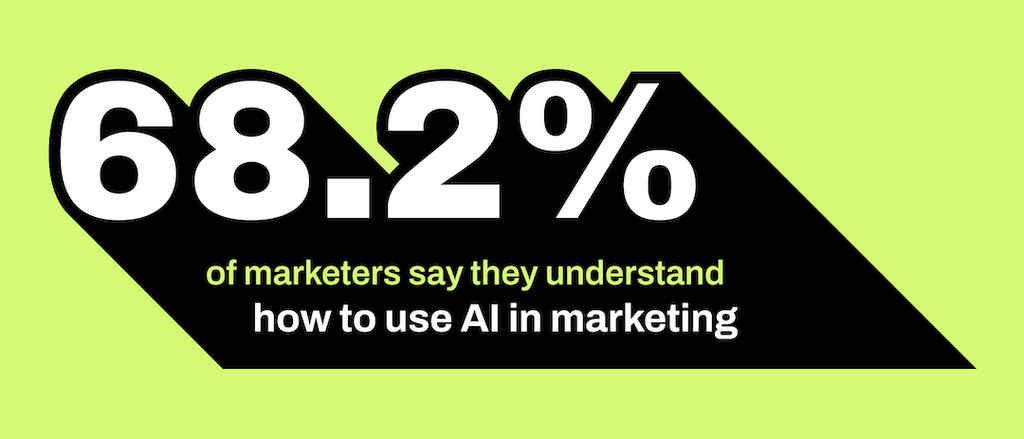
95. 68.2% of marketers say they understand how to use AI in marketing (2026 report) (HubSpot State of Marketing 2026). That compares with 47% in 2025.
96. Only 30% of CMOs report mature or fully developed AI readiness in 2026 (Gartner CMO Spend Survey 2026).
97. 38% of marketing leaders cite lack of internal AI expertise and talent as a barrier to AI-driven efficiency (2026) (Gartner CMO Spend Survey 2026, June release). It is the most-cited barrier.
98. 62% of marketers name lack of education and training as a barrier to AI in marketing (2025) (Marketing AI Institute 2025 State of Marketing AI). It was the top barrier for the fifth year running.
99. 32% of marketers say their company offers AI training for the marketing team (2025) (Marketing AI Institute 2025 State of Marketing AI). Another 44% say there is none, and 21% say their company is still building it.
100. 14.9% of US marketing job postings on Indeed mentioned AI in December 2025 (Indeed Hiring Lab). That was up from 8.4% in January 2025.
101. 65% of marketing teams have designated AI roles (2025) (Jasper State of AI in Marketing 2026). These roles often focus on AI operations, workflows or strategy.
Will AI Replace Marketing Jobs?
These figures cover marketers’ views on jobs and official job projections.
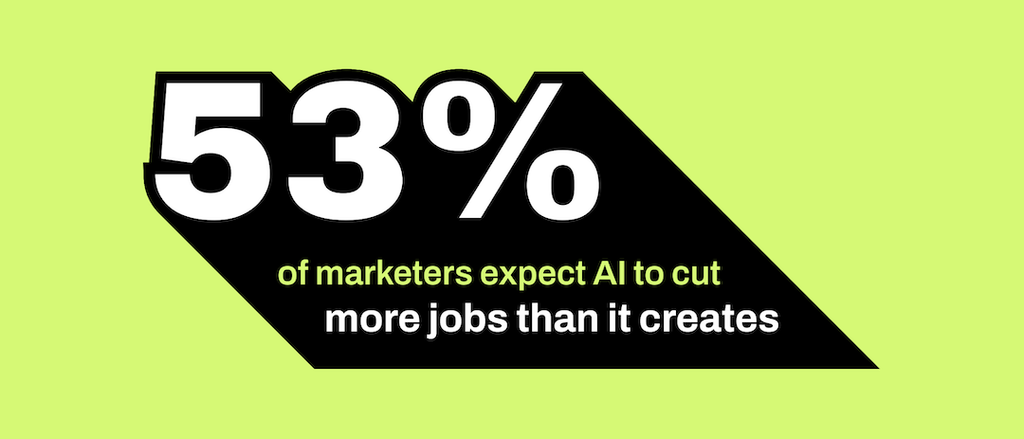
102. 53% of marketers believe AI will eliminate more marketing jobs than it creates over the next three years (2025) (Marketing AI Institute 2025 State of Marketing AI). In 2023, 40% said the same.
103. 73.4% of marketers say AI works alongside them and helps with most of their job duties (HubSpot State of Marketing 2026).
104. −4% is the projected 2025–35 change in US advertising and promotions manager jobs (BLS Occupational Outlook Handbook). Managers and their staff are expected to use technology, including AI, to make, test and modify digital ads faster.
105. 7% growth is projected for US marketing manager jobs from 2025 to 2035 (BLS Occupational Outlook Handbook).
Wrapping Up
AI now sits inside most marketing teams and the ad platforms they buy from.
The open question is how much of that use turns into revenue. We’ll update this page as new data comes out.